
Trailer plates and towing specifications use several weight terms that are easy to mix up. How they relate depends on whether the trailer is hitched to the tow vehicle or standing on its own. This guide walks through both, then puts some numbers on it.
When the trailer is coupled to a tow vehicle
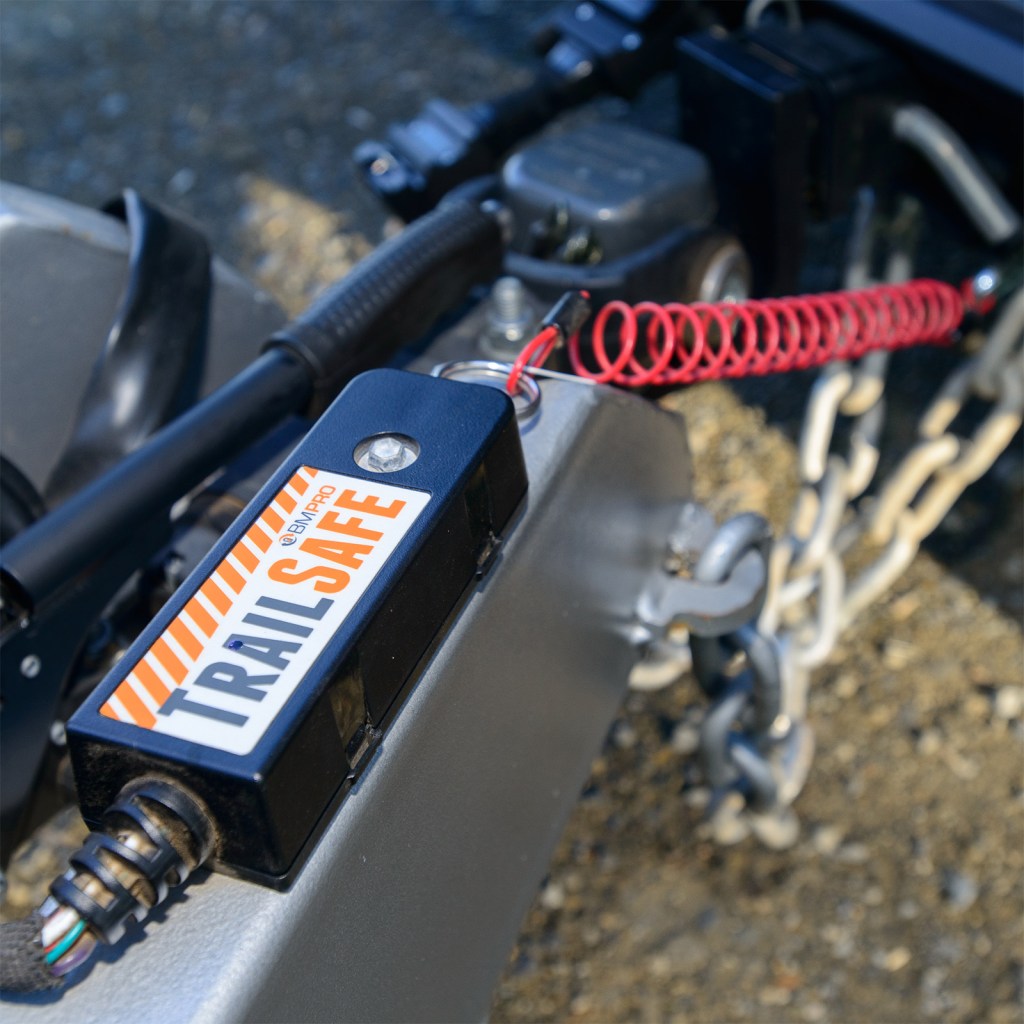
Once the trailer is hitched up, its weight is shared. Some of it is carried through the trailer’s own wheels and axles (the GTM), and some is transferred to the tow vehicle through the coupling (the tow-ball load).
- ATM
- Aggregate Trailer Mass: the whole loaded trailer, including the part that rests on the tow ball.
- Tow-ball load
- The weight the loaded trailer puts down on the tow ball, carried by the tow vehicle.
- GTM
- Gross Trailer Mass: the weight carried through the trailer’s own axles and wheels.
- ATM (Aggregate Trailer Mass) is the total mass of the fully loaded trailer, including the part that rests on the tow ball.
- GTM (Gross Trailer Mass) is the mass carried through the trailer’s axles when it is coupled to the tow vehicle. It is always less than the ATM, because some of the weight has moved onto the tow vehicle.
- Tow-ball load (ball load) is the weight the fully laden trailer puts vertically on the tow bar. With the trailer fully loaded, it is the difference between the ATM and the GTM.
When the trailer is not coupled
Unhitched, for example parked on level ground and resting on its jockey wheel, the tow-ball load is no longer part of the calculation. The trailer’s ATM is simply its tare plus the load it can carry.
- Tare
- The empty trailer, as the manufacturer specifies it.
- Payload
- The most the trailer is rated to carry.
- ATM
- The fully loaded trailer standing on its own: tare plus payload.
- Tare is the unladen weight of the trailer, as specified by the manufacturer.
- Payload is what the trailer can carry: the difference between its tare and its ATM.
- ATM is the combined weight of the trailer and its full load when it is not coupled to a tow vehicle.

Putting numbers on it
Take a trailer with a tare of 2,300 kg and a payload of 700 kg. Fully loaded, its ATM is 3,000 kg. Hitch it up with a 300 kg tow-ball load and the trailer’s axles carry the other 2,700 kg: that is its GTM. Both bars below add up to the same 3,000 kg. Hitching up doesn’t change how heavy the trailer is, only where the weight goes.
Same trailer, same ATM
An example trailer with an ATM of 3,000 kg, unhitched and hitched up
Unhitched
Tare 2,300 kg+Payload 700 kg=ATM 3,000 kg
Hitched up
GTM 2,700 kg+Tow-ball load 300 kg=ATM 3,000 kg
Show the figures as a table
| Situation | Part | Weight |
|---|---|---|
| Unhitched | Tare | 2,300 kg |
| Unhitched | Payload | 700 kg |
| Hitched up | GTM | 2,700 kg |
| Hitched up | Tow-ball load | 300 kg |
How much tow-ball load is normal?
Tow-ball load limits are often around 10% of a vehicle’s maximum towing mass, but not always: some vehicles allow around 5%, and some more than 10%. The actual load depends on where the trailer’s axles sit and how it is packed, so check it on a weighbridge or with tow-ball scales.
Every part has a rating
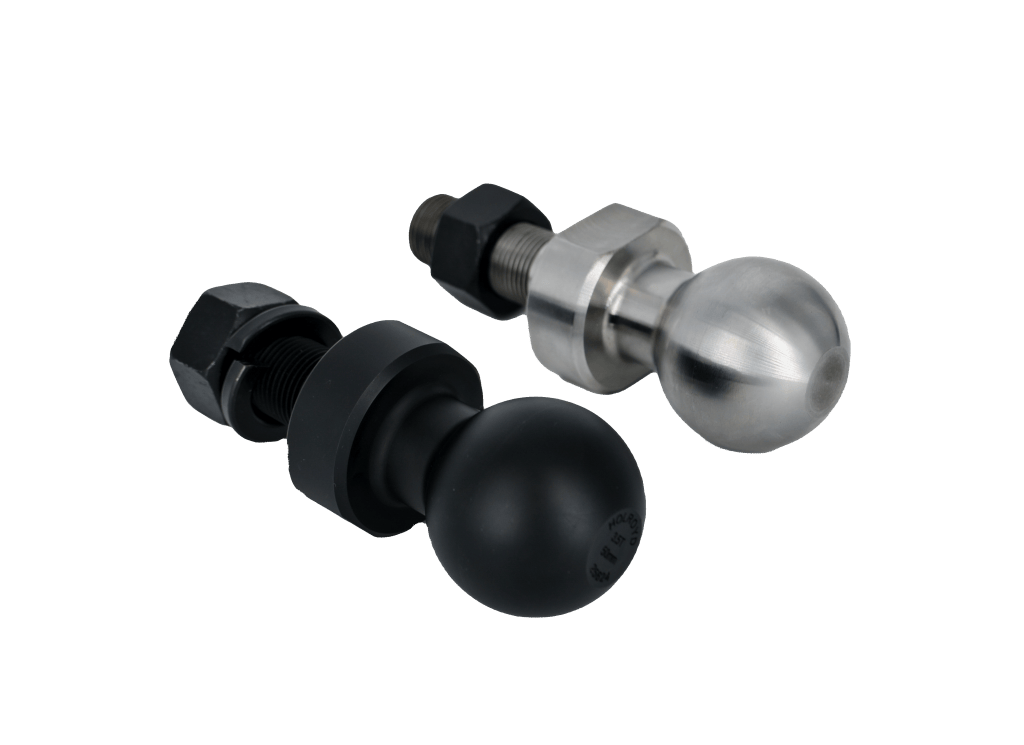
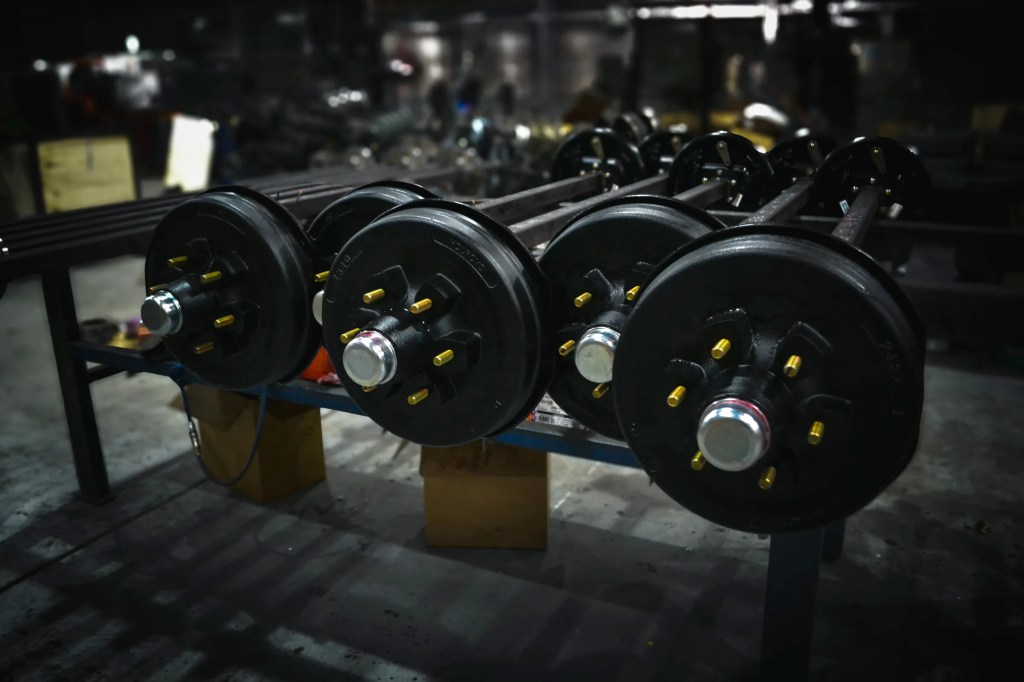
The weight has to pass safely through every part between the trailer and the road. The trailer’s coupling must be rated for at least the trailer’s ATM. The tow ball, the tow bar and the tow vehicle each have their own towing and tow-ball limits, and the trailer’s axles, hubs and wheels carry the GTM. Stay within the lowest of them.
Keep in mind
- Don’t load the trailer past its ATM.
- Stay within the tow vehicle’s towing capacity and tow-ball load limit, and the tow bar’s rating. If the tow bar is rated lower than the vehicle, the tow bar’s rating applies.
- The tow-ball load changes with how the trailer is packed, so weigh it after loading.
- The figures in this article are for illustration only. Always check the plates and handbooks for your own trailer, tow vehicle and tow bar.
Need couplings, tow balls or axles matched to your trailer? Contact the Holroyd team, or ask a question in the comments below.
Definitions: RACQ, What you need to know about trailer and tow vehicle specifications.
Leave a comment
Got a question about your setup, or a tip to share? A first comment is checked by the Holroyd team before it appears.